Everyone told you the hard part would be over when treatment ended. The scans were clear, the team said the words you had been waiting to hear, and the people around you exhaled and moved on, certain that you would too. Instead you found yourself somewhere you did not expect: officially well, and quietly terrified. The week before a follow-up scan, your sleep falls apart. A new ache sends your mind straight to the worst possibility. You smile when people call you a survivor, but privately you do not feel like you have survived anything, because the fear never fully left. The uncertainty that lingers after cancer, when treatment is done but the fear is not, is far more common than anyone told you, and it has a logic worth understanding.
Why the Fear Does Not End When Treatment Does
There is a widespread assumption, held by patients and loved ones alike, that the end of treatment is the end of the ordeal. The reality of survivorship is often more complicated.
When you are in active treatment, there is a strange comfort in doing something. You have appointments, a protocol, a team actively watching your body. When treatment ends, that scaffolding disappears. The frequent monitoring stops, the team steps back, and you are sent off to resume a normal life that no longer feels available to you. Many people describe this transition as the moment the fear actually intensified, not eased, because now there is nothing standing between them and the possibility of the cancer returning unnoticed.
This fear has a name in the clinical world: fear of cancer recurrence, often shortened to FCR. It is not a rare or marginal experience. According to a systematic review and meta-analysis presented in the American Society of Clinical Oncology’s educational materials, analyzing data from more than nine thousand patients, 59% of cancer survivors and patients reported moderate fear of recurrence and a further 19% reported severe fear. A separate meta-analysis published in the journal Psycho-Oncology considers fear of recurrence the most common unmet need among cancer survivors. If you are living with this fear, you are not an anxious outlier. You are part of a substantial majority whose distress simply does not get talked about.
Scanxiety: When the Calendar Becomes a Threat
If you have noticed that you fall apart in the days before a scan, there is a word for that too.
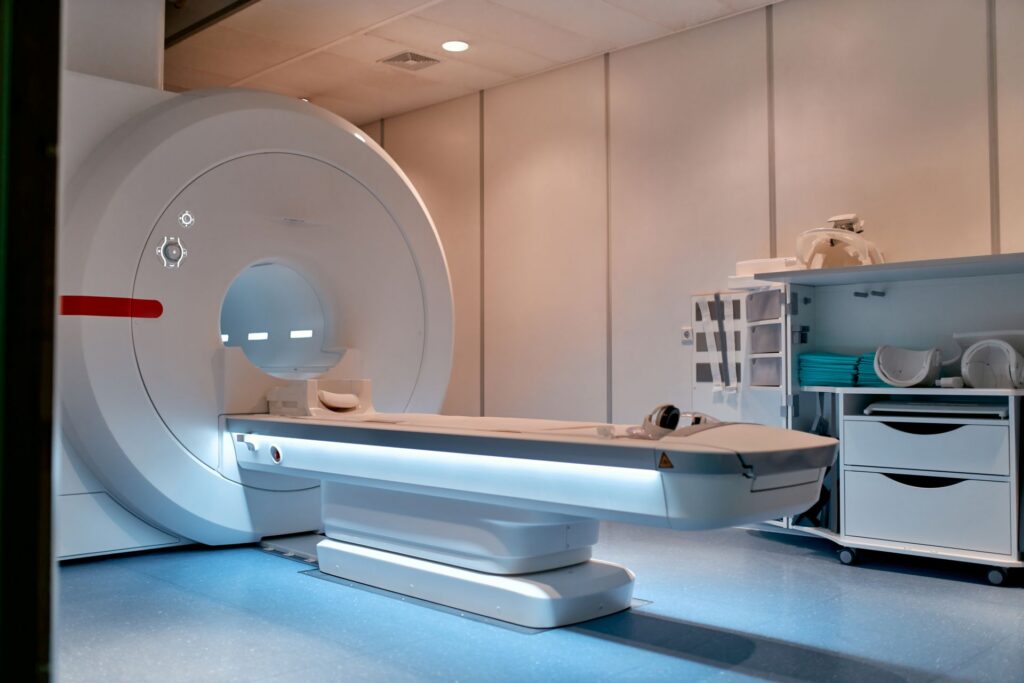
Scanxiety describes the spike of fear and anxiety that builds around medical imaging and the wait for results. For many survivors, the scan itself becomes a recurring threat embedded in the calendar. The dread can begin days or weeks ahead. Sleep becomes difficult. Concentration narrows. The mind rehearses bad news in advance, as if bracing for impact might somehow soften it. Then comes the wait between the scan and the results, a stretch of time that can feel unbearable, where ordinary life is suspended and every hour carries the weight of what the images might show.
Scanxiety is closely related to fear of recurrence but not identical to it. Studies examining the two together have found that both are linked to an underlying difficulty tolerating uncertainty, and to a heightened tendency to monitor the body for signs of threat. That bodily vigilance is part of what makes survivorship so exhausting. A headache is no longer just a headache. A new pain, a lingering cough, a patch of fatigue, each one can set off an internal alarm that this is it, the cancer is back. The body that betrayed you once cannot be fully trusted again, and so it gets watched, constantly, for evidence of betrayal.
None of this means you are doing survivorship wrong. These responses make sense given what you have been through. Your nervous system learned that your body could harbor a serious threat without obvious warning, and it adjusted accordingly. The vigilance that now exhausts you was, at one point, an entirely reasonable adaptation.
The Two Traps: Watching Too Closely and Looking Away
Fear of recurrence tends to push people toward one of two coping patterns, and both can quietly make life harder.
The first is hypervigilance. Studies of cancer survivors describe how fear of recurrence is often managed through excessive monitoring and frequent use of the medical system: repeated checks, recurring requests for reassurance, an ongoing search for certainty that never quite arrives. The relief that follows a clear scan or a reassuring appointment is real, but it does not last, because the underlying fear was never about the specific test. Within days or weeks, the worry returns and the cycle begins again.
The second pattern is avoidance. Some survivors cope by looking away entirely: skipping follow-up appointments, avoiding scans, refusing to think about the cancer at all, because engaging with any of it brings the fear too close. In the short term this provides relief. Over time it can become dangerous, both because it can interfere with genuinely important medical surveillance and because the avoided fear tends to grow larger in the dark.
Most people move between these two patterns rather than living permanently in one. You might monitor obsessively for a stretch, then swing into avoidance when the vigilance becomes too much. Neither extreme serves you well, and the goal of support is not to land you in one camp but to help you find a more sustainable middle: staying engaged with the medical care that genuinely matters while loosening the grip of fear on the ordinary days in between.
Survivor Guilt and the Loneliness of Being Well
There is another layer to survivorship that almost nobody warns you about: the complicated feelings that come with having made it through.
If you have lost people along the way, others you met in treatment, members of a support group, friends made in waiting rooms, you may carry a quiet guilt about being the one who is still here. Why you and not them. The question has no answer, and it can make celebrating your own survival feel disloyal. There is also the loneliness of being well in a way that does not match how you feel inside. The people around you have moved on. They want to see you healthy and whole, and so the gap between their relief and your ongoing fear can feel unbridgeable. You learn to perform okayness, because correcting them feels like too much to explain.
This performance is its own kind of exhaustion. The world expects a triumphant survivor, and you are something more honest and more complicated: someone who is grateful and frightened, relieved and grieving, moving forward and looking over your shoulder all at once. Holding all of that alone is heavy, and it is one of the reasons survivorship can feel paradoxically harder than treatment, when at least the fear made obvious sense to everyone around you.
Learning to Live Alongside the Uncertainty
The goal of psychological support in survivorship is not to eliminate uncertainty, because uncertainty cannot be eliminated. No scan can promise the future. The goal is to change your relationship with the uncertainty, so that it occupies less of your life.
This is work that can genuinely help. Evidence-based psychological approaches exist specifically for fear of recurrence, and they do not depend on false reassurance. Instead they help you build a tolerance for not knowing, interrupt the cycles of hypervigilance and avoidance, and reclaim the ordinary days that fear has been quietly taking from you. The aim is not a life with no fear, which is not realistic after what you have been through, but a life in which the fear no longer runs the show.
If you notice that scanxiety is consuming the days and weeks around your appointments, that you are caught in cycles of checking or avoiding, that survivor guilt is weighing on you, or that the fear is keeping you from re-entering your own life, these are signals that support could ease the road ahead. You do not have to wait until the fear becomes unmanageable to ask for help, and you do not have to justify your fear by how serious your cancer was. The fear is real regardless.
If at any point you have thoughts of ending your life, please reach out to the 988 Suicide and Crisis Lifeline by calling or texting 988, available 24 hours a day, 7 days a week.
At Evolve Health Psychology, Dr. Feit brings specialized training in psycho-oncology to her work with cancer survivors navigating life after treatment. She understands that survivorship is not simply a return to normal, and that learning to live alongside uncertainty takes real support over time. Based in Atlanta, she collaborates with physicians at major cancer centers across Georgia, and supports survivors well beyond the point where active treatment ends. You can learn more about how we approach cancer and oncology psychology. Our practice serves clients throughout Georgia and, via telehealth through PSYPACT, across the country.
Surviving cancer changed you, and the fear that lingers afterward is part of that change, not a failure to recover from it. You do not have to carry it by yourself.
Ready to take the next step? Schedule a consultation call or contact us at (404) 436-2207. You can also reach Dr. Feit directly at drfeit@evolvebehavioralpsych.com.
This article is for educational purposes only and does not replace professional medical or psychological advice. If you are struggling with fear of recurrence or anxiety after cancer treatment, please consult a qualified mental health professional.
Reviewed for clinical accuracy. This content references peer-reviewed research on fear of cancer recurrence published in Psycho-Oncology and presented in American Society of Clinical Oncology educational materials, as well as research on scanxiety and bodily threat monitoring in cancer survivors. This article does not constitute medical advice, diagnosis, or treatment.
(404) 436-2207 | drfeit@evolvebehavioralpsych.com | Atlanta, Georgia